


Basics – Everyone Should Know
Published in The Lighthouse, Lymphedema Network Newsletter, March 2024.
What’s this mysterious other circulatory system ?
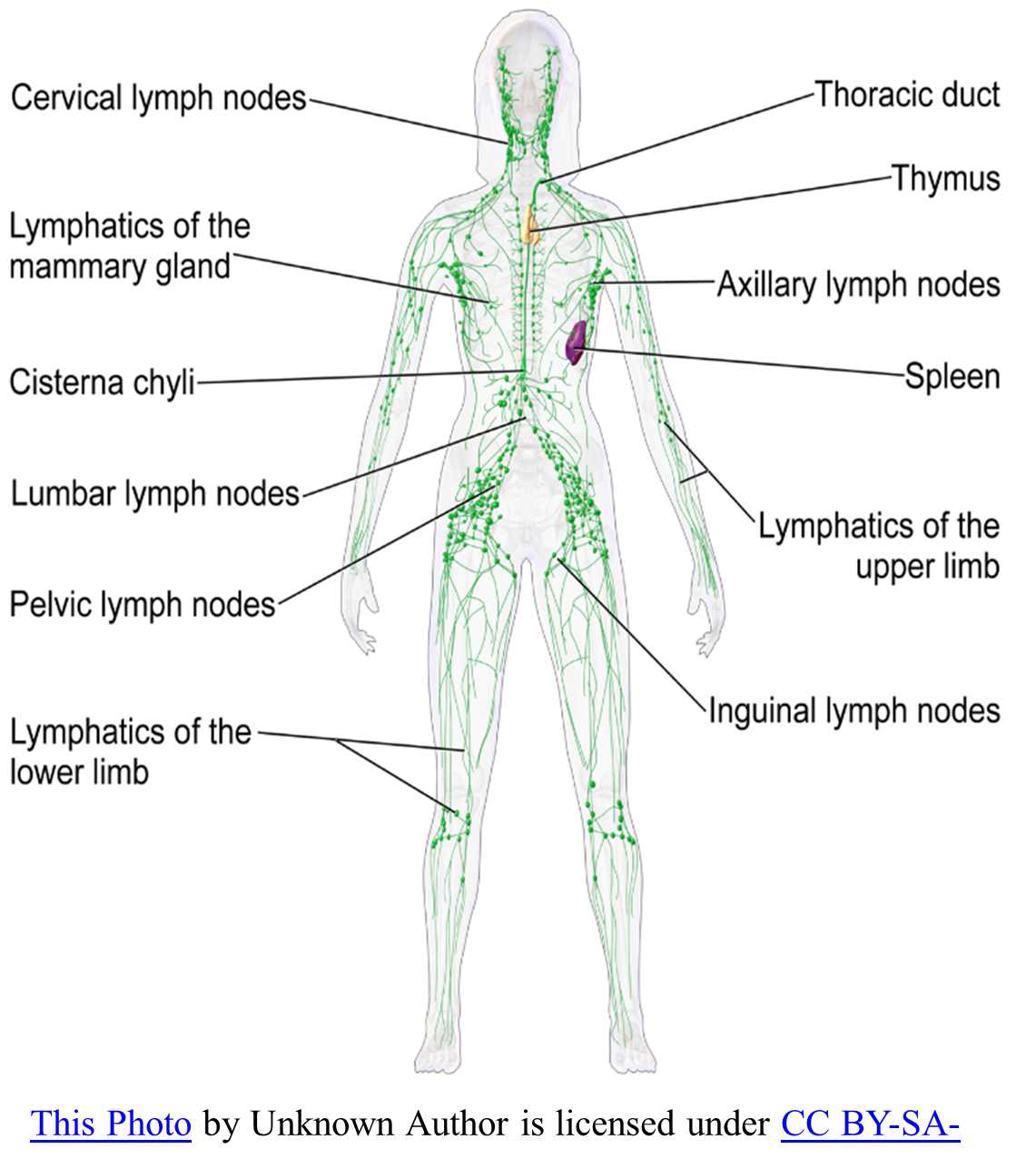
One question on a biology test was all we heard about the lymphatic system in our 20th century classrooms. But with 21st century discoveries, our body’s combined transportation, cleaning, and disease-fighting system should have its own chapter in every 21st century biology textbook.

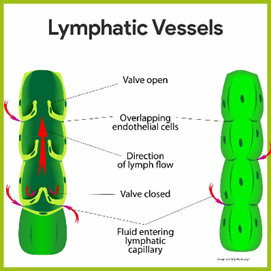
Lympha was the Roman goddess of fresh water. The human lymphatic system carries fluid and waste from all parts of the body to central collecting organs – the thoracic duct, right lymphatic duct, and cisterna chyli. Like our veins, tiny lymphatic vessels have flaps that work like check valves in a hydraulic system to move fluid in one direction – toward these central organs – see illustrations.
The debris, pathogens, and products carried by Lympha’s waters (lymph) are filtered and analyzed in stations (called lymph nodes and lymphatic organs) throughout the body. They are the first line of defense against pathogens, and often start an immune response to these microorganisms that make the body sick.
In the digestive system, lymphatic capillaries called lacteals in the small intestines collect fluids and long-chain fats to transport to the rest of the body. And in the brain, the glymphatic system uses lymphatic fluid to wash our brain cells while we sleep. See resource section for more information.
In 2010, scientists showed that the hair-sized lymphatic vessels drain and transport most fluid that exits the circulatory system into interstitial tissues between and surrounding your cells. Previously, we thought veins did this important work – this was known as the Starling Principle. But the Revised Starling Principle includes the revolutionary new understanding that the lymphatic channels of our body’s sewer system are involved in all forms of fluid transport and inflammation drainage.
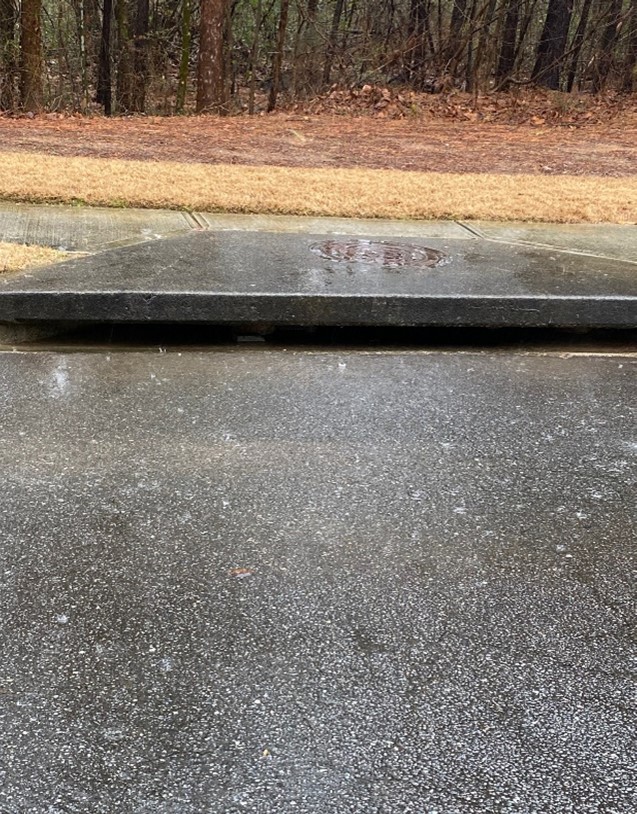
Humans build sewer systems to control water around our cities. Roads flood in heavy rain. Water shimmers in the light as it races downhill to storm drains, which are connected by sewer pipes to a central collecting and filtering pond. When unblocked and undamaged, this system clears the streets in a few hours, and the water carries away dirt, leaves, and other debris. Like underground sewer pipes, lymphatic channels perform their essential work unseen and unappreciated…unless that ‘sewer pipe’ gets blocked or damaged.
Lymphatic Dysfunction can come from a genetic abnormality, disease, or injury. Human flooding, called swelling, edema, or inflammation, is typically cleared a short time after an accident or infection temporarily overwhelms the system. But blocked or slow lymphatic channels can lead to chronic, lifetime swelling called lymphedema. Millions of people have some stage of lymphedema, which can be treated by a Certified Lymphedema Therapist, usually a physical or occupational therapist with special training.
March 6 is World Lymphedema Day, designated to raise awareness about the mysterious, miraculous lymphatic system and research on lymphatic dysfunction. Celebrate by learning more about this invisible organ system, essential to our human ecosystem.
Want to Know More? Check out these resources:
Anatomy of the Lymphatic and Immune Systems
LaMantia, Jean. Gut Lymphatics and Long Chain Triglycerides
Jessen NA, Munk AS, Lundgaard I, Nedergaard M. The Glymphatic System: A Beginner’s Guide
J. Rodney Levick, C. Charles Michel, Microvascular fluid exchange and the
revised Starling Principle
Hettrick H, Aviles F. All edema is lymphedema
Lymphatic Education and Research Network
 Sharon S. Shepard
Leave a comment